Solar for Landed Properties
Landed homes in Singapore offer the best opportunities for solar installation. Here's how to maximize your rooftop potential:
Roof Type Considerations
Concrete Roofs: Ideal for solar. Easy mounting with minimal waterproofing concerns.
Metal Roofs: Require specialized mounting systems. Check for rust and structural integrity.
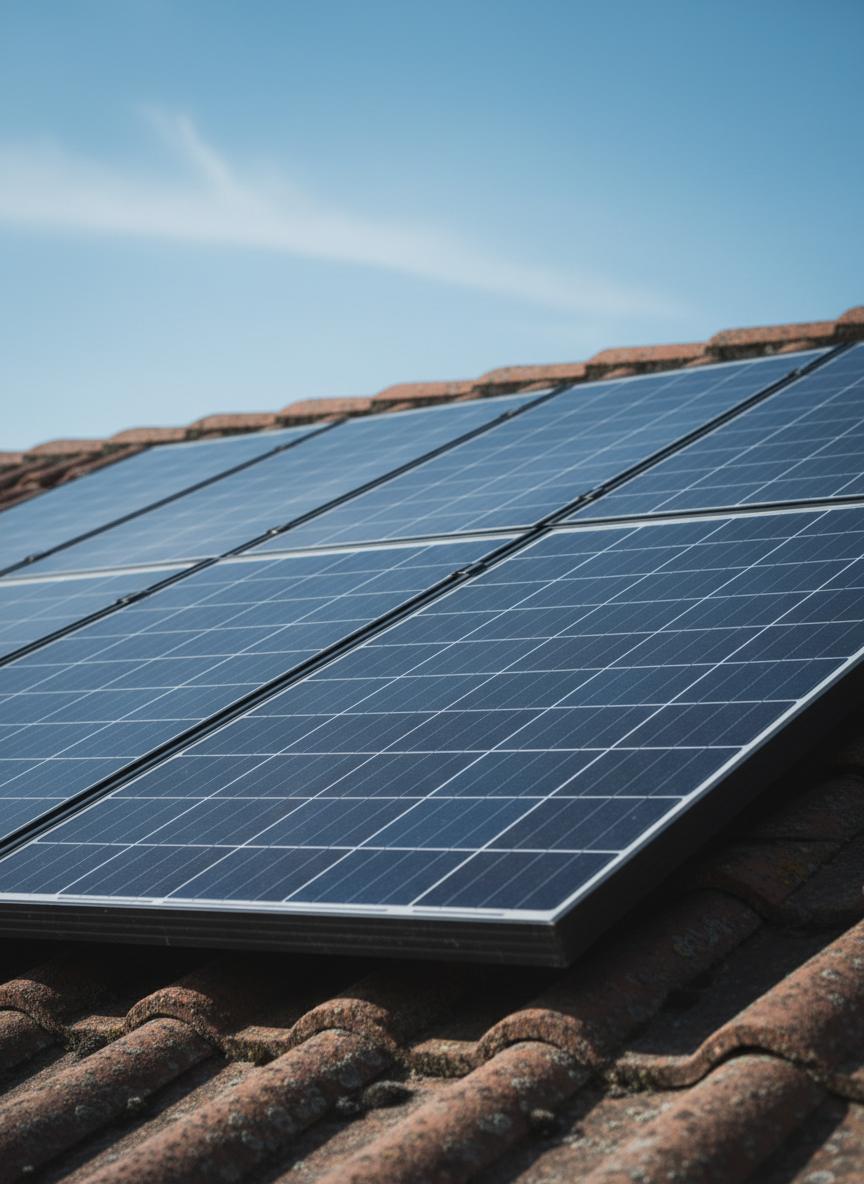
Tiled Roofs: Need careful tile removal and replacement. Ensure waterproofing is maintained.
Orientation and Tilt
Optimal conditions for Singapore:
- Orientation: South-facing is best, but east/west work well too
- Tilt angle: 5-15 degrees is ideal for Singapore's latitude
- Flat roofs: Use tilted mounting systems for better performance
Maximizing Space
Strategies for getting the most from your roof:
- East-West arrays: Increase capacity by 30-40% on flat roofs
- Skirt around obstructions: Design around vents and aircon units
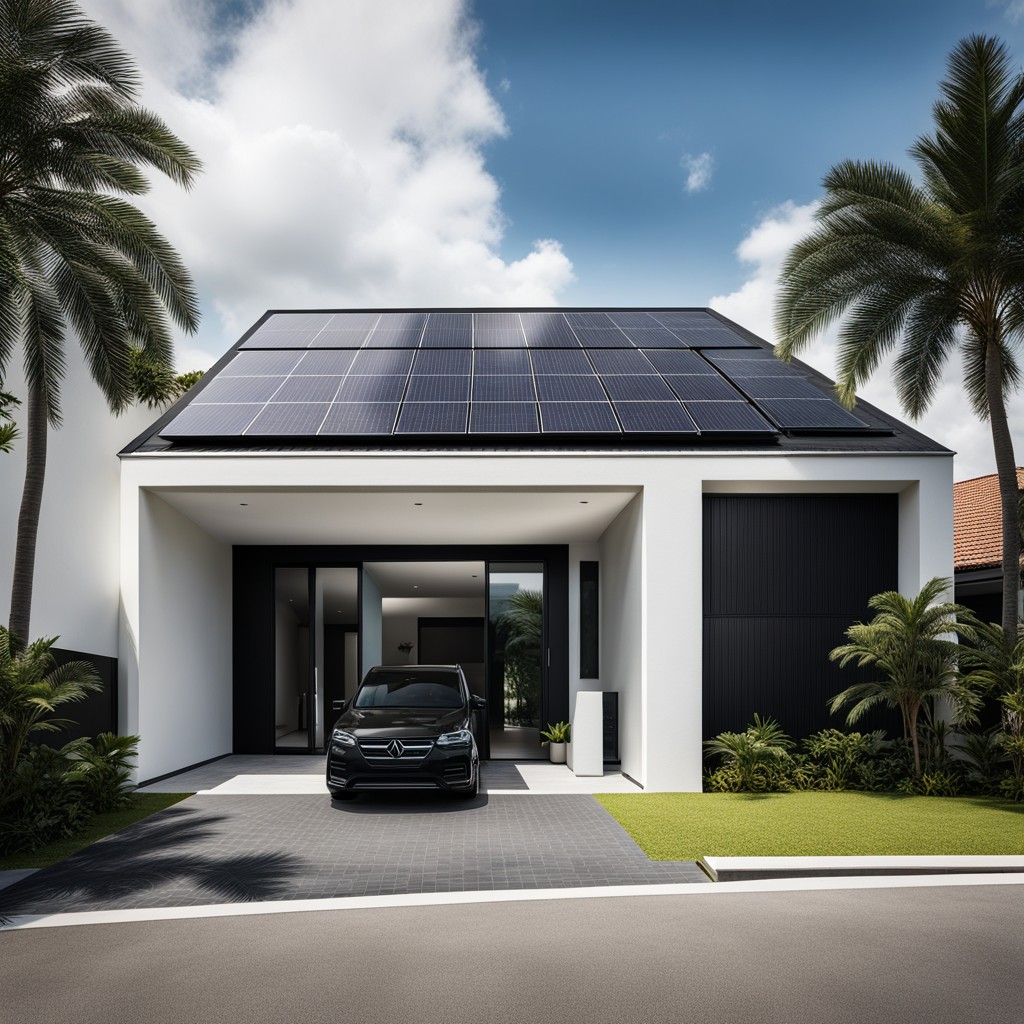
- Carport solar: Extend capacity with ground-mounted carport systems
System Sizing for Landed Homes
Typical system sizes by property type:
- Terrace house: 8-12 kW (40-60 panels)
- Semi-detached: 10-15 kW (50-75 panels)
- Bungalow: 15-25 kW (75-125 panels)
Aesthetic Considerations
Options for maintaining curb appeal:
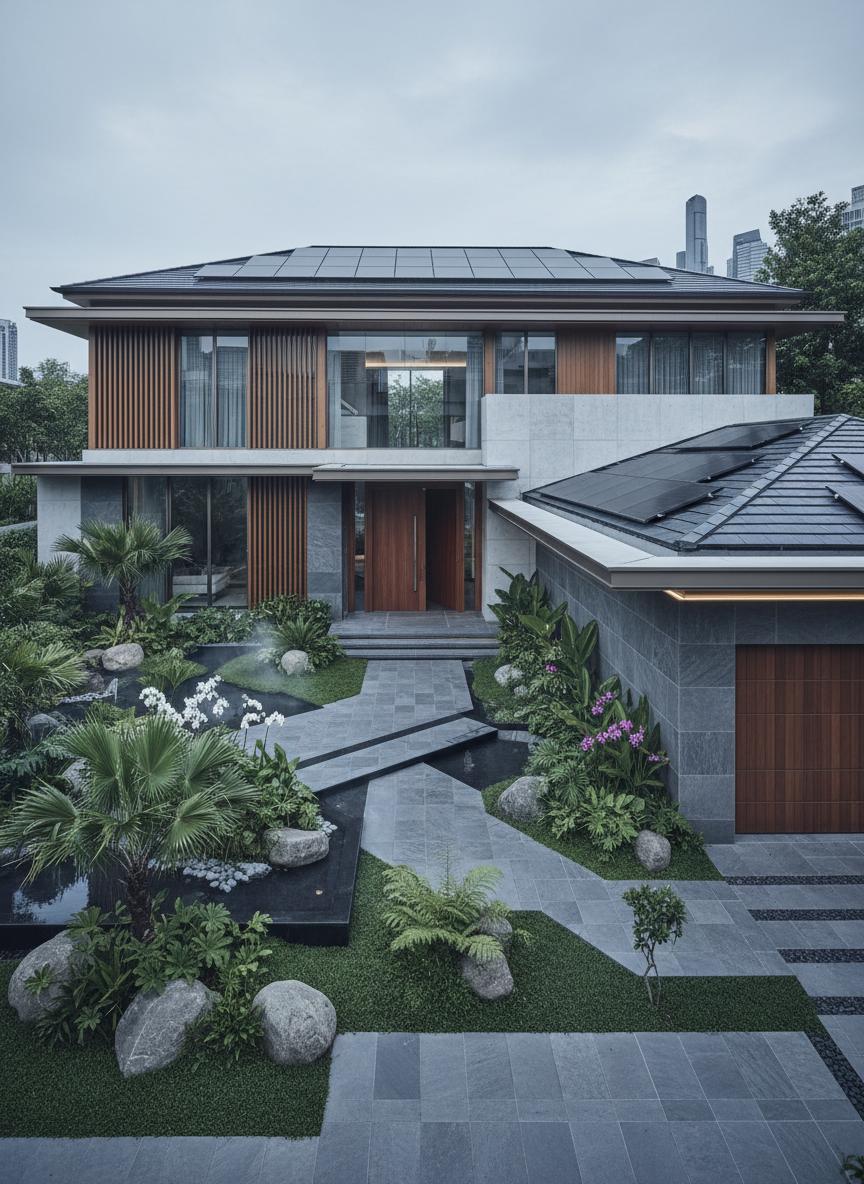
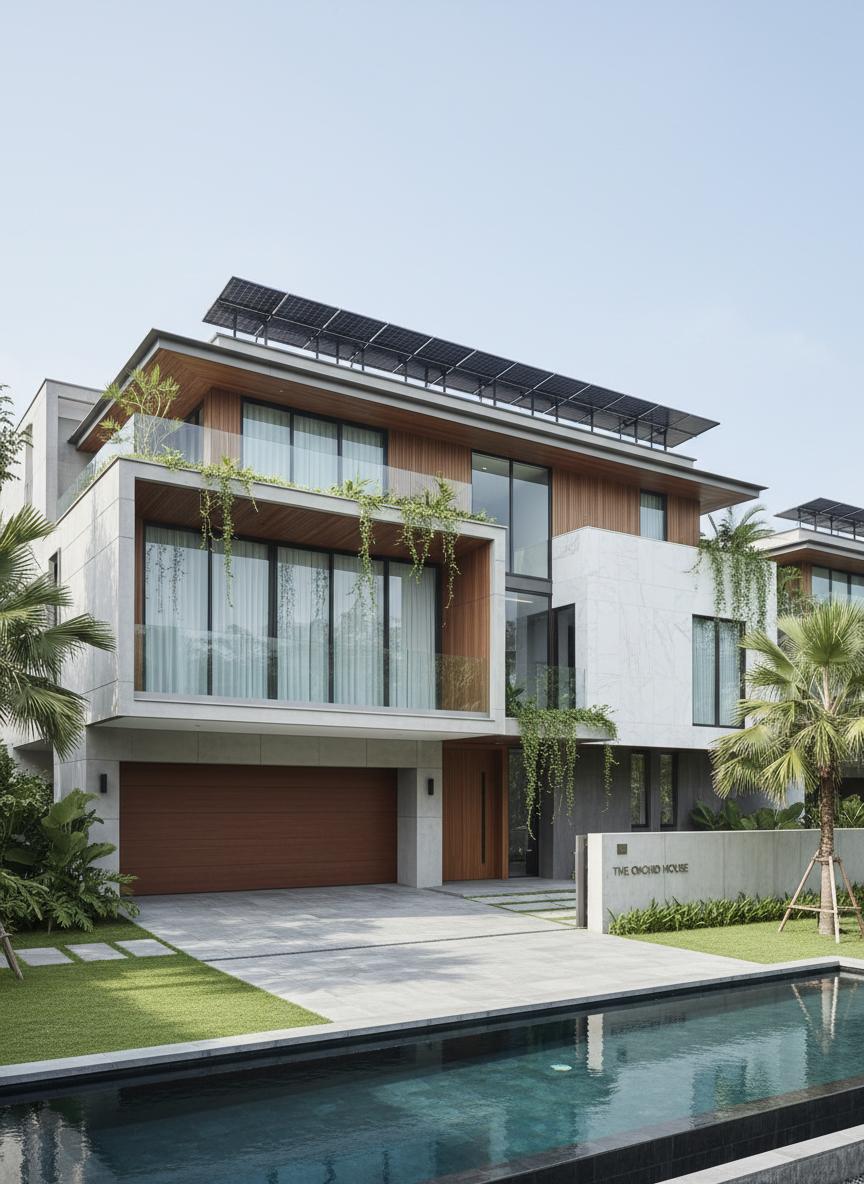
- All-black panels for sleek appearance
- In-roof mounting for flush look
- Strategic placement to minimize street visibility
Integration with Home Design
Consider future plans:
- Leave space for potential attic conversions
- Plan for future battery storage
- Consider EV charging integration
URA Guidelines and Planning Permission
For landed properties, the Urban Redevelopment Authority (URA) generally doesn't require planning permission for rooftop solar installations, provided:
- Panels don't exceed the highest point of the roof by more than 1 meter
- Installation doesn't extend beyond the building's footprint
- For conservation areas (Katong, Emerald Hill, Joo Chiat), additional design guidelines may apply
Properties in landed housing estates with Design Guidelines (e.g., Serangoon Gardens, Upper Bukit Timah) should check estate-specific rules. Some estates require panels to be positioned away from street view or use all-black panels for aesthetic consistency.
Singapore Landed Property Types and Solar Potential
Terrace Houses (Intermediate): Typically 80-120m² roof area. Party walls on both sides limit access but provide shading protection from east/west sun. Best approach: single south-facing array or dual east-west split for maximum capacity.
Corner Terraces: Additional side roof exposure allows 1-2kW extra capacity. Side walls may also accommodate vertical bifacial panels for morning/afternoon generation.
Semi-Detached: 120-180m² roof area with one party wall. Broader frontage allows wider arrays with fewer strings. Typically accommodate 10-15kW systems generating 1,200-1,800 kWh/month.
Bungalows (Detached): 200-500m²+ roof area. Maximum flexibility for array design. GCB (Good Class Bungalow) properties often have extensive grounds allowing ground-mounted carport solar in addition to rooftop systems, potentially reaching 30-50kW total capacity.
Shophouses: Long, narrow buildings with limited roof area but high electricity usage (commercial + residential). Require careful sizing and may benefit from wall-mounted vertical panels on rear facades.
Structural Considerations for Singapore Homes
Reinforced Concrete Roofs: Most common in post-1980s homes. Can easily support 15-25 kg/m² loading from solar systems. BCA requires structural assessment for older properties (pre-1990) or those showing signs of concrete spalling.
Pitch Roofs vs. Flat Roofs: Singapore's modern homes typically have flat or low-pitch concrete roofs ideal for solar. Older bungalows may have pitched tile roofs requiring specialized hooks and waterproofing details.
Gross Floor Area (GFA) Implications
For landed properties planning future development, note that:
- Rooftop solar installations generally don't count toward GFA
- However, raised structures (pergolas with solar, carport solar) may have GFA implications
- If you're planning A&A (Additions & Alterations) within 5 years, design solar layout to accommodate future roof changes
Neighborhood and Aesthetic Integration
Singapore's landed estates value neighborhood aesthetics. Consider:
- All-black panels: Blend better with dark roof waterproofing membranes
- Low-profile mounting: 10-15cm height minimizes visual impact from street level
- Setback from edges: Install panels 30-50cm from roof edges to hide them from street view
- Landscaping: Strategic tree placement can screen panels while avoiding shading
Some premium districts (Holland Road, Nassim Road) have unwritten expectations regarding panel visibility. A pre-installation neighborhood walk to assess sightlines is worthwhile.
Integration with Smart Home Systems
Modern landed properties increasingly integrate solar with home automation:
- Load scheduling: Program pool pumps, water heaters, and EV chargers to run during peak solar hours (10 AM - 3 PM)
- Energy monitoring: Whole-home energy monitors (S$200-400) track consumption patterns and optimize self-consumption
- Smart inverters: Some models offer API access for integration with home automation platforms
Future-Proofing Your Installation
When designing for landed properties, plan ahead:
- Conduit capacity: Install extra conduit for future battery or EV charger connections
- Panel layout: Leave 20% roof space vacant for potential expansion
- Structural loading: If considering future solar carport, ensure driveway area can support foundations
- Three-phase upgrade: Request SP Group assessment for three-phase supply if planning 10kW+ systems
Maximize Your Landed Property
Contact Argyle Solar for a comprehensive assessment of your landed property's solar potential. We'll design a system that maximizes energy production while respecting your home's aesthetics.
Roof Types and Solar Suitability
Singapore's landed properties feature diverse roof types: pitched concrete tiles (most common), flat concrete slabs, metal sheets, and clay tiles. Each requires specific mounting approaches. Tile roofs need careful tile replacement and waterproofing, while flat roofs may benefit from elevated ballasted systems that don't penetrate the waterproofing membrane. Metal roofs allow direct clamp mounting with minimal intrusion.
Optimal Roof Orientation
True south-facing roofs (azimuth 180°) are ideal in Singapore, but east-west orientations are also viable with only 10-15% annual production loss. North-facing roofs (common on corner lots) experience higher losses (20-30%) but may still be economically viable with high electricity consumption. Tilting panels at 10-15° optimizes for Singapore's 1.35°N latitude while allowing self-cleaning from rain.
Maximizing Rooftop Capacity
Standard 60-cell panels (1.0×1.7m) require approximately 1.8 m² each including gaps. A 200 m² roof can accommodate 100-110 panels (30-35 kW). However, setbacks from roof edges (typically 1m), ridges, and obstructions (chimneys, skylights) reduce usable area. Professional 3D shading analysis using drone surveys optimizes panel placement for maximum annual energy yield.
Aesthetic Considerations
All-black panels with black frames provide a sleek, integrated appearance that complements modern architecture. Some homeowners opt for panel layouts that follow roof geometry rather than maximizing capacity, accepting minor output reductions for improved aesthetics. Building-integrated photovoltaics (BIPV) solar tiles offer the ultimate aesthetic integration but at 2-3× standard panel costs.