The Science Behind Solar Panels
Solar panels convert sunlight into electricity through the photovoltaic effect. Here's how it works in simple terms:
Step 1: Absorbing Sunlight
Solar panels are made of photovoltaic (PV) cells, typically silicon. When sunlight hits these cells, it excites electrons, creating an electric field.
Step 2: Generating DC Electricity
The excited electrons flow through the cell, creating direct current (DC) electricity. Each cell produces about 0.5 volts, so panels combine many cells to reach usable voltages (30-40V).
Step 3: Converting to AC Power
Since homes use alternating current (AC), an inverter converts the DC electricity from panels into AC electricity that can power your appliances.
Step 4: Powering Your Home
The AC electricity flows to your electrical panel, distributing power throughout your home. Excess electricity can be exported to the grid.
Key Components of a Solar System
- Solar panels: Capture sunlight and convert it to electricity
- Inverter: Converts DC to AC electricity
- Mounting system: Secures panels to your roof
- Monitoring system: Tracks performance and energy production
Singapore's Grid and Electrical Standards
Singapore's electrical grid operates at 230V single-phase and 400V three-phase, with a stable 50Hz frequency. This world-class grid reliability means solar systems here can focus on energy generation rather than complex backup configurations.
Solar System Sizing for Singapore Homes
Typical configurations based on property type:
- 4-room HDB flat: While individual installation isn't permitted, community solar subscriptions typically cover 300-500 kWh/month
- Condo apartment: MCST rooftop systems typically serve common areas; individual balcony systems range from 0.3-0.8kW
- Terrace house: 6-10kW systems covering 30-50m² of roof space, generating 720-1,200 kWh/month
- Semi-detached: 8-12kW systems, generating 960-1,440 kWh/month
- Bungalow: 12-20kW systems, generating 1,440-2,400 kWh/month
SP Group Connection Process
Connecting your solar system to Singapore's grid involves:
- Application submission: Your installer submits technical drawings and equipment specifications to SP Group
- Technical review: SP Group verifies compliance with SS 638 and connection requirements (typically 1-2 weeks)
- Installation: Licensed Electrical Worker (LEW) installs the system
- Inspection: SP Group conducts a site inspection to verify installation quality
- Meter installation: A bidirectional meter is installed to track imports and exports
- Activation: System goes live, and you start earning from exports
Argyle Solar manages this entire process, from initial application to final activation, typically completing it within 3-4 weeks.
Net Energy Metering vs. Gross Metering
Singapore currently uses gross metering under the Grid Integration Program (GIP), where all exports are measured separately and paid at S$0.20/kWh. Unlike net metering (where exports directly offset imports 1:1), gross metering means you sell at S$0.20 and buy at around S$0.31. This makes self-consumption optimization critical — the more solar you use directly, the more you save at the higher retail rate.
Monitoring Your System
Modern solar installations include smartphone apps showing real-time production. In Singapore's consistent climate, expect only 5-10% variation between months. Significant drops usually indicate panel soiling (dust, bird droppings) or equipment issues — both easily addressed in our tropical climate.
Modern Solar Technology
Today's panels are more efficient and durable than ever. With no moving parts and 25+ year lifespans, solar systems require minimal maintenance while providing decades of clean energy.
Semiconductor Physics Basics
Solar panels rely on the photovoltaic effect in semiconductor materials, typically silicon. When photons with sufficient energy (wavelengths of 300-1,200 nm) strike the silicon atoms, they excite electrons from the valence band to the conduction band, creating electron-hole pairs. The p-n junction within the cell separates these charges, generating a DC voltage that drives current through an external circuit.
Panel Construction Details
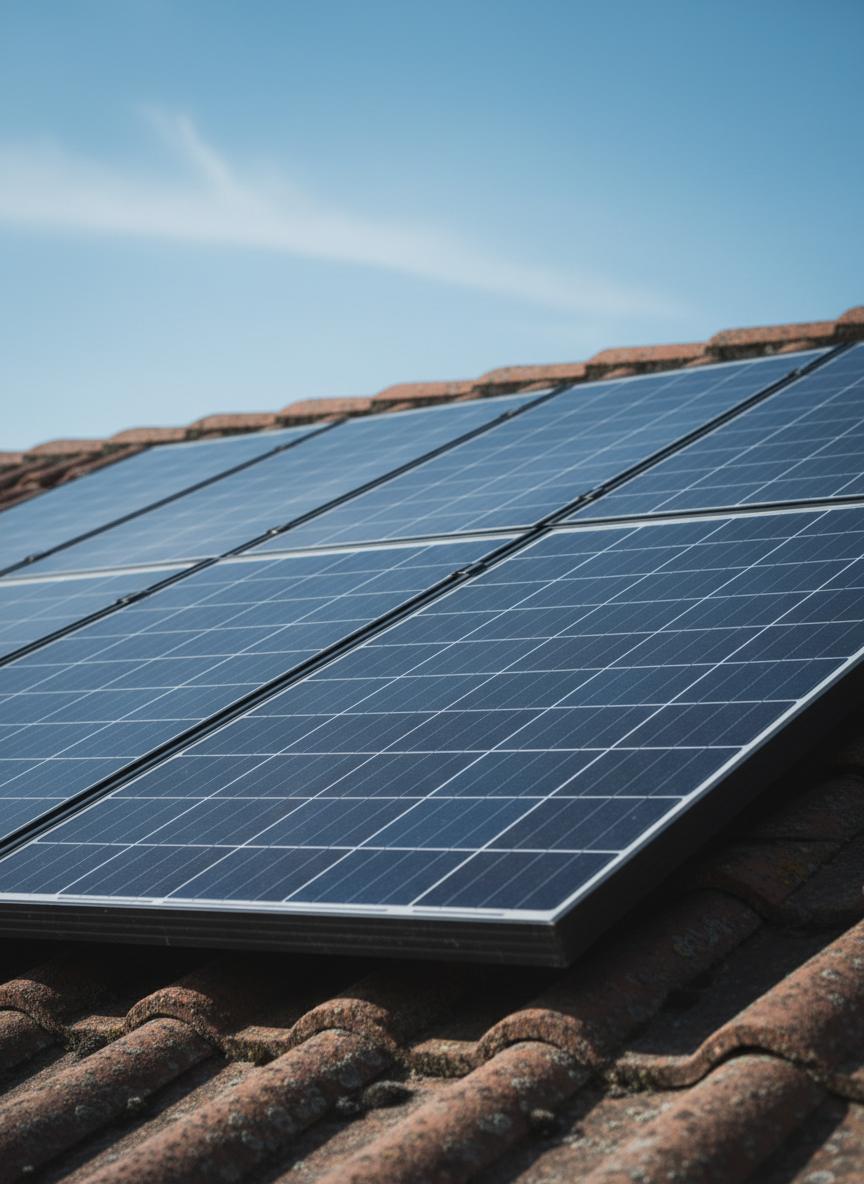
A standard 60-cell residential panel contains crystalline silicon wafers (typically 156×156 mm) connected in series. The cells are sandwiched between tempered glass (3-4 mm thick for impact resistance), EVA encapsulant layers, and a Tedlar or PET backsheet. An aluminum frame provides structural support, and a junction box with bypass diodes prevents hot spots and shading losses.
Inverter Technology
The inverter is the brain of a solar system, converting DC electricity from panels to AC for household use. String inverters are cost-effective for simple roof layouts, while power optimizers or microinverters maximize production on complex roofs with partial shading. In Singapore, inverter efficiency typically ranges from 96-98.5%, with premium models like SolarEdge and Enphase offering module-level monitoring.
System Monitoring
Modern solar systems include smartphone apps and web portals for real-time monitoring. Homeowners can track daily, monthly, and lifetime production, compare actual vs. expected output, and receive alerts for system faults. This transparency ensures optimal performance and quick identification of any issues requiring maintenance.