What is Solar Battery Storage?
Solar batteries store excess energy generated during the day for use at night or during cloudy periods. This increases your energy independence and maximizes the value of your solar investment.
Updated September 2026
Combine battery storage with a full solar installation for maximum energy independence.
Explore Argyle Solar's battery and installation servicesBattery prices in Singapore have fallen another ~15% since 2024, and LFP technology now dominates. This guide reflects current 2026 pricing (S$800–1,200/kWh installed), the latest models (Tesla Powerwall 3, Sungrow SBR, Huawei LUNA2000), and updated payback math under today's export rates.
Benefits of Battery Storage
- Energy independence: Reduce reliance on the grid during peak hours
- Backup power: Keep essential appliances running during outages
- Maximize solar usage: Store excess instead of selling to grid at lower rates
- Peak shaving: Avoid high electricity rates during peak periods
Battery Options in Singapore
Popular options in 2026 include the Tesla Powerwall 3, Sungrow SBR series, Huawei LUNA2000, and BYD Battery-Box — almost all lithium iron phosphate (LFP) now, for better heat tolerance. Usable capacities range from 5kWh to 15kWh, with installed prices typically S$800–1,200 per kWh (S$8,000–12,000 for a 10kWh system).
2026 Battery Price Comparison (10 kWh Systems, Installed)
| Model | Usable Capacity | Chemistry | Warranty | Installed Price | S$/kWh |
|---|---|---|---|---|---|
| Tesla Powerwall 3 | 13.5 kWh | LFP | 10 yrs / 70% | S$14,000–16,000 | S$1,040–1,190 |
| Sungrow SBR096 (3× SBR032) | 9.6 kWh | LFP | 10 yrs | S$8,500–10,500 | S$890–1,090 |
| Huawei LUNA2000-10 | 10 kWh | LFP | 10 yrs | S$9,000–11,000 | S$900–1,100 |
| BYD Battery-Box Premium LVL | 10.2 kWh | LFP | 10 yrs | S$8,500–10,000 | S$830–980 |
| SolarEdge Home Battery | 10 kWh | NMC | 10 yrs | S$10,000–12,000 | S$1,000–1,200 |
Prices are Singapore installed estimates as of Sep 2026, including inverter integration and GST. Quotes vary by site complexity and installer.
Is It Worth the Investment?
For most Singapore homes, batteries currently add 3-5 years to the payback period. However, they're valuable if you:
- Experience frequent power outages
- Have high evening electricity usage
- Want maximum energy independence
- Live in an area with time-of-use pricing
Singapore's Grid Reliability Context
Singapore boasts one of the most reliable power grids globally, with SP Group maintaining 99.99% uptime. Unlike countries with frequent outages where batteries are essential for backup, Singapore's grid stability means batteries are primarily valuable for:
- Maximizing self-consumption: Store daytime solar for evening use when electricity rates are highest
- Peak demand shaving: Reduce reliance on grid power during expensive peak hours (typically 6 PM - 10 PM)
- Future-proofing: Prepare for potential time-of-use pricing that SP Group may introduce
Cost-Benefit Analysis for Singapore Homes
Let's look at the numbers for a typical 5kW system with 10kWh battery storage:
- System cost: S$10,000–14,000 (solar) + S$8,000–12,000 (10kWh battery) = S$18,000–26,000 total
- Additional savings from battery: S$50–80/month (storing excess instead of exporting at the prevailing low export rate and buying back at S$0.32–0.35/kWh)
- Battery-only payback: 12–18 years — roughly equal to the battery warranty
- Combined system payback: 6–8 years (vs. 4–6 years for solar-only)
For most Singapore homeowners, the math currently favors solar-only systems with grid export under the GIP. However, battery economics improve significantly for:
- Homes with high evening consumption (EV charging, pool pumps, multiple air conditioners)
- Properties considering time-of-use tariff plans if introduced
- Homeowners prioritizing energy independence regardless of payback
Singapore-Specific Battery Considerations
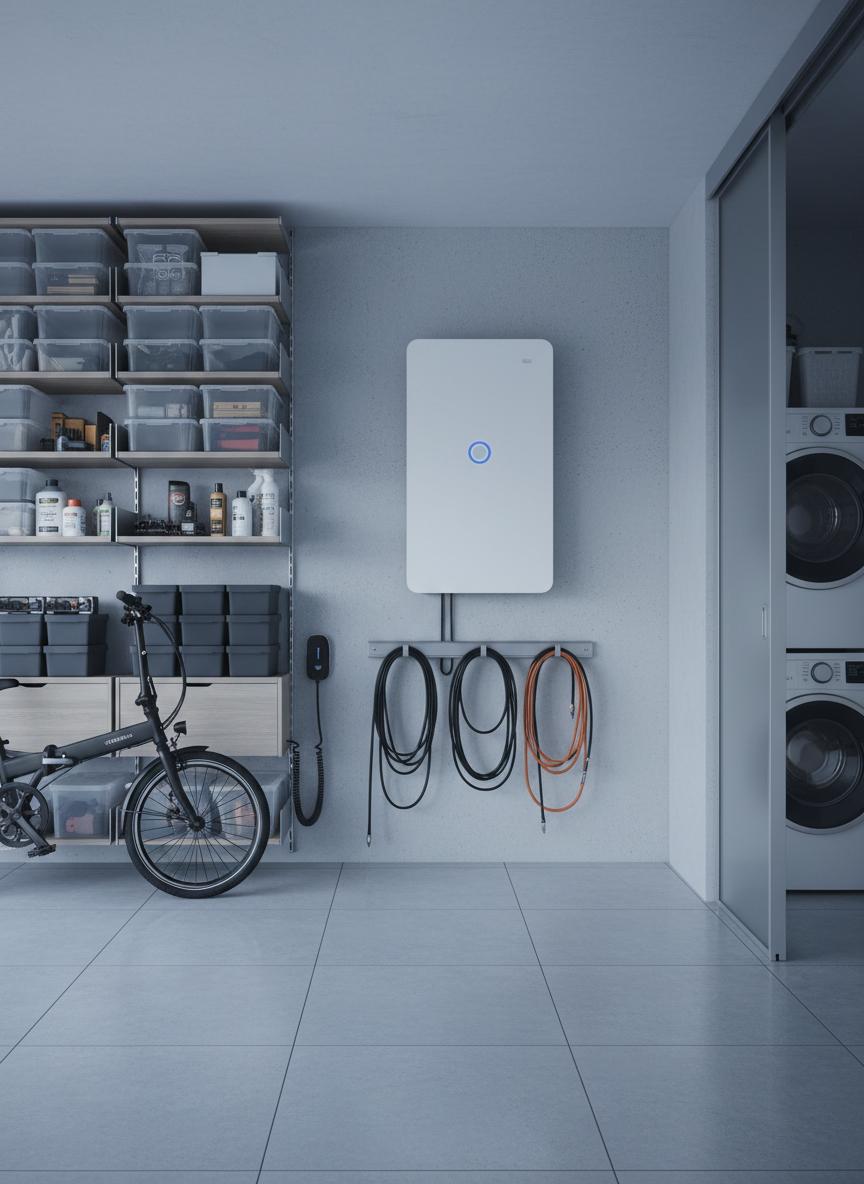
Temperature: Batteries lose capacity faster in Singapore's heat. Look for lithium iron phosphate (LFP) batteries with operating temperatures up to 55°C and install them in shaded, ventilated areas — never in direct sunlight or unventilated rooms.
Space: Most landed homes have utility rooms or car porches suitable for battery installation. Condos and HDB flats rarely have appropriate spaces, making batteries impractical for these property types.
HDB/Condo Restrictions: MCST and HDB regulations generally don't permit battery storage in shared buildings due to fire safety concerns. Check with your building management before considering batteries.
When Batteries Make Sense in Singapore
Batteries are most worthwhile for landed properties with:
- Monthly electricity bills exceeding S$600
- High evening/nighttime usage patterns
- Plans to add EV charging (future-proofing)
- Interest in participating in future virtual power plant programs
The Future of Battery Storage
Battery prices continue to fall while performance improves. We expect costs to become competitive with grid electricity within the next 5 years.
Battery Storage Economics in Singapore
While battery storage adds S$8,000-15,000 to system costs, the economics are improving rapidly. Battery prices have fallen 85% since 2010 and continue declining. In Singapore, batteries provide value through peak shaving — storing cheap solar energy and discharging during expensive evening peak rates when electricity costs S$0.32-0.35 per kWh.
Backup Power During Outages
Although Singapore's grid is highly reliable, batteries provide peace of mind during the rare outages that do occur. Essential circuits like lighting, refrigerators, and medical equipment can be maintained for 4-12 hours depending on battery capacity and load. This is particularly valuable for households with elderly members or medical needs.
Available Battery Technologies
Lithium iron phosphate (LFP) batteries are the clear 2026 favourite for residential solar in Singapore due to their thermal stability in tropical heat and long cycle life. Leading options: Tesla Powerwall 3 (13.5 kWh, integrated inverter), Sungrow SBR (9.6–25.6 kWh modular stack), Huawei LUNA2000 (5–30 kWh modular), and BYD Battery-Box (5.1–12.8 kWh modular). Most offer 6,000–10,000 cycles — 15–20 years of service life — with 10-year warranties.
Future Outlook for Storage
With Singapore's energy market liberalization and potential time-of-use pricing, batteries will become increasingly valuable. The Energy Market Authority is exploring virtual power plant concepts where aggregated home batteries can provide grid services. Early adopters may benefit from future revenue streams beyond personal consumption.
Get a Personalised Battery Payback Estimate
Every household's usage pattern is different. Use our solar estimator to model your system with and without battery storage, or explore financing options to spread the upfront cost over manageable monthly payments.