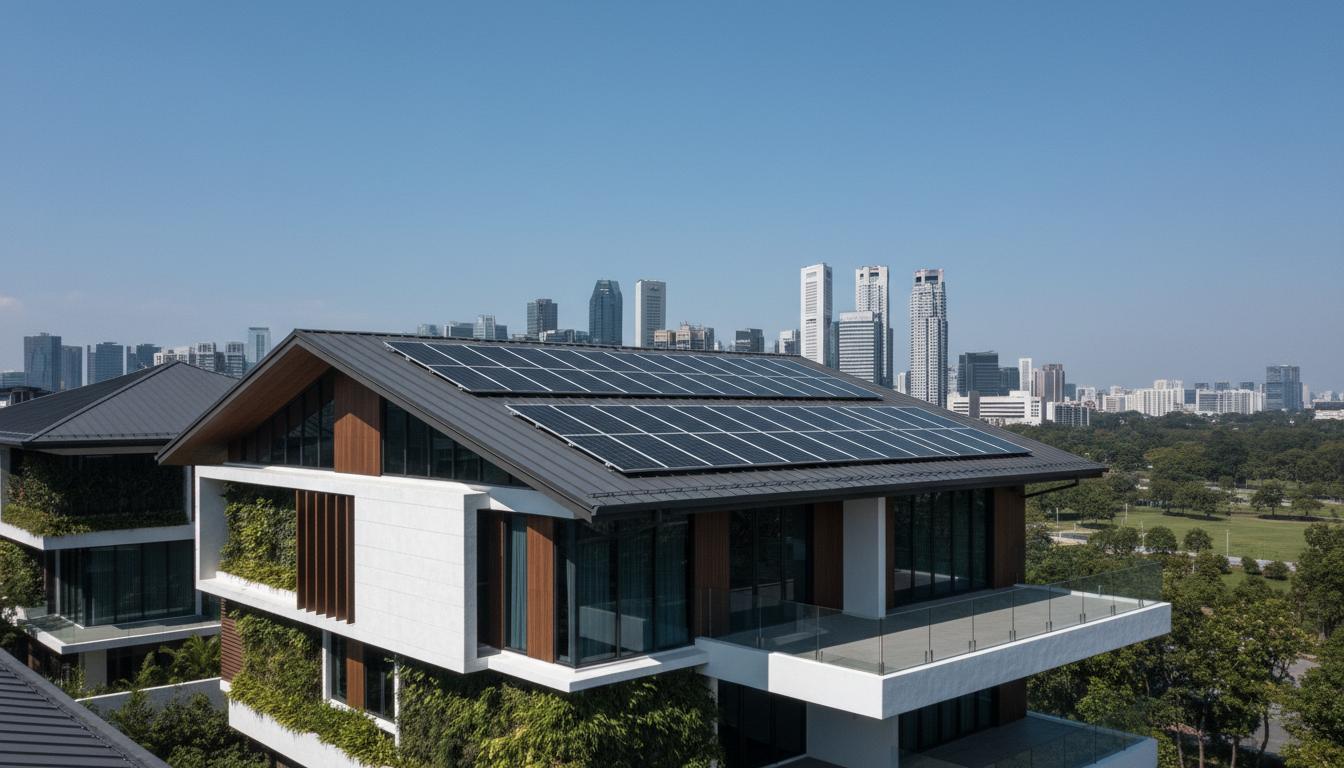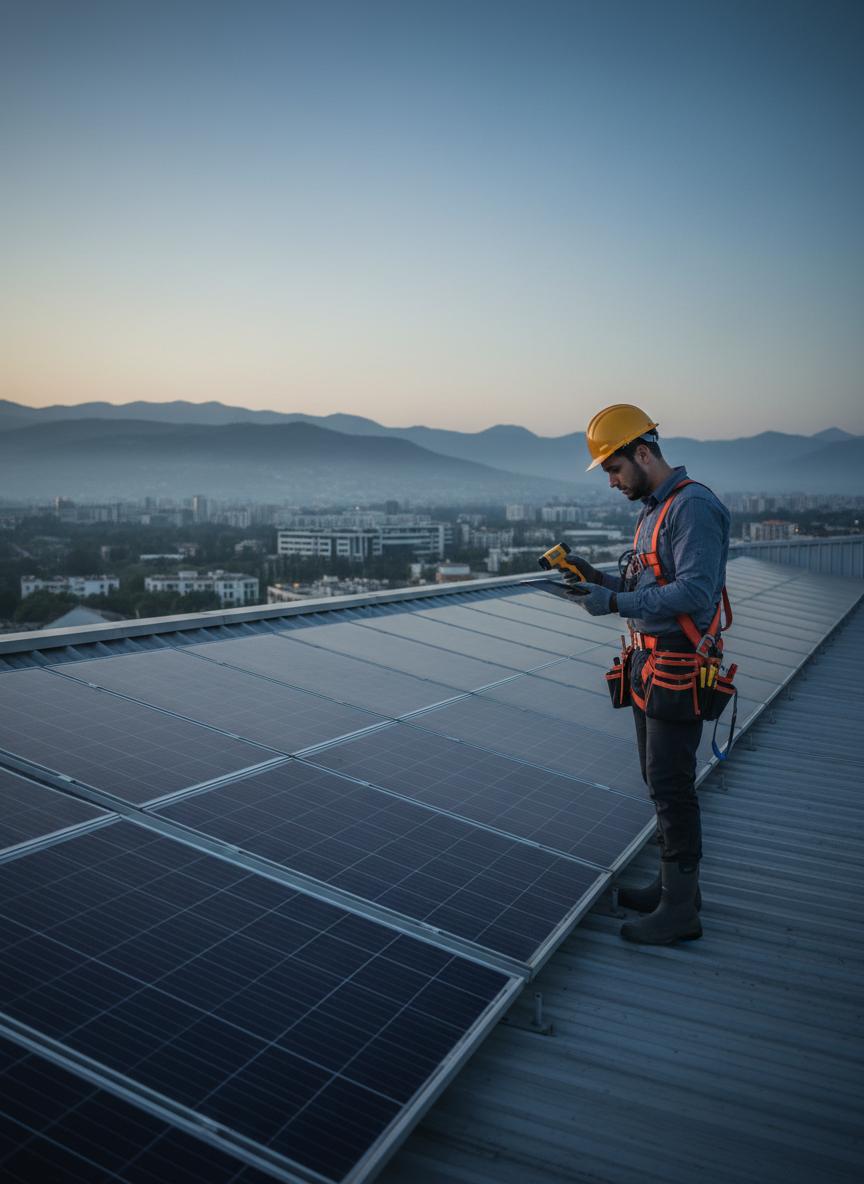
What Is a Solar Power Purchase Agreement?
A Power Purchase Agreement (PPA) is a financing structure where a solar provider installs, owns, and maintains a rooftop solar system on your property — and you simply buy the electricity it generates at an agreed rate. Instead of spending S$500,000 or more on a commercial system, your business pays nothing upfront and starts saving from month one.
PPAs have become the dominant model for commercial and industrial solar in Singapore because they remove the two biggest barriers: capital expenditure and maintenance responsibility.
How a Singapore Solar PPA Works
The structure is straightforward:
- Free site assessment: The provider evaluates your roof structure, load profile, and electricity usage
- System design and installation: At no cost to you, typically taking 2-6 months including approvals
- You buy solar electricity: At a contracted rate per kWh, usually 20-50% below the prevailing grid tariff
- Provider handles everything: Maintenance, monitoring, insurance, and warranty claims for the full contract term
Contract terms in Singapore typically run 15 to 20 years, with options to renew, purchase the system at fair market value, or have it removed at end of term.
What Does PPA Electricity Cost?
Commercial rooftop solar in Singapore achieves a levelised cost of electricity (LCOE) of roughly S$0.14-0.19 per kWh, depending on roof type, system size, and energy load. PPA rates are set above this but well below the grid — businesses commonly pay S$0.20-0.25 per kWh against a Q4 2026 regulated tariff of around S$0.31 per kWh including GST.
That gap is your saving. A factory consuming 200,000 kWh per month could save S$12,000-20,000 monthly — over S$3 million across a 20-year term, with zero capital outlay.
Quick Example: 500 kWp Warehouse System
A Jurong logistics warehouse signs a 20-year PPA at S$0.22/kWh. The system generates ~620,000 kWh/year, of which 85% is self-consumed, replacing grid power at S$0.31/kWh. Annual savings: approximately S$47,000 — with no upfront investment and no maintenance obligations.
Who Is a Good Fit for a PPA?
PPAs work best for businesses that:
- Own or have long-term leases (15+ years) on their premises
- Have substantial roof space — typically 2,000 sqm or more for meaningful economics
- Consume most electricity during the day (factories, cold storage, data rooms, offices)
- Prefer to invest capital in their core business rather than energy infrastructure
If you own your building outright and have capital available, a direct purchase usually delivers higher lifetime savings. A PPA trades some of that upside for zero risk and zero capex. Condo MCSTs evaluating a PPA for common-area power can also read our dedicated Solar PPA for condominiums page.
PPA vs Cash Purchase vs Solar Lease
| Factor | PPA | Cash Purchase | Solar Lease |
|---|---|---|---|
| Upfront cost | S$0 | Full system cost | S$0 or small deposit |
| What you pay for | Electricity used (per kWh) | Nothing after payback | Fixed monthly rent |
| Lifetime savings | Moderate (20-50% discount) | Highest (payback in 3-5 yrs) | Moderate |
| Maintenance | Provider's responsibility | Yours | Provider's responsibility |
| Best for | Capital-constrained C&I | Owner-occupiers with capital | Businesses wanting fixed costs |
What to Negotiate in a Singapore PPA
Not all PPA contracts are equal. Before signing, scrutinise:
- Escalation clause: Annual rate increases of 1-3% are common. Model the escalator against historical tariff movements — a steep escalator can erase savings by year 10.
- Buyout options: Ensure you can purchase the system at fair market value (typically years 7, 10, and end-of-term). This matters if you sell the property.
- Roof warranty protection: The provider should restore or reinforce any roof penetration damage and carry liability insurance.
- Performance guarantees: Look for minimum generation guarantees with compensation clauses if the system underperforms.
- Exit clauses: What happens if you relocate, sell the building, or the provider becomes insolvent?
Regulatory Requirements in Singapore
Even under a PPA, your project must comply with Singapore regulations. Systems below 1 MWac are generally exempt from an electricity generation licence, but grid connection approval through SP Group, compliance with SS 650:2023 electrical installation standards, and BCA structural approvals for the rooftop are still required. A reputable PPA provider handles all of this — ask for their track record with EMA and BCA submissions before committing.
Is a PPA Right for Your Business?
If you have the roof space and daytime load but don't want to tie up capital, a PPA is often the fastest route to lower operating costs. If you have capital and plan to hold the property long-term, buying outright delivers better lifetime returns. Either way, the first step is the same: a proper feasibility study with real generation and savings modelling.
Get a Commercial Solar Feasibility Study
We model PPA, lease, and purchase scenarios side by side with real tariff data — so you can choose with confidence.