Why Landed Properties Are Ideal for Solar in Singapore
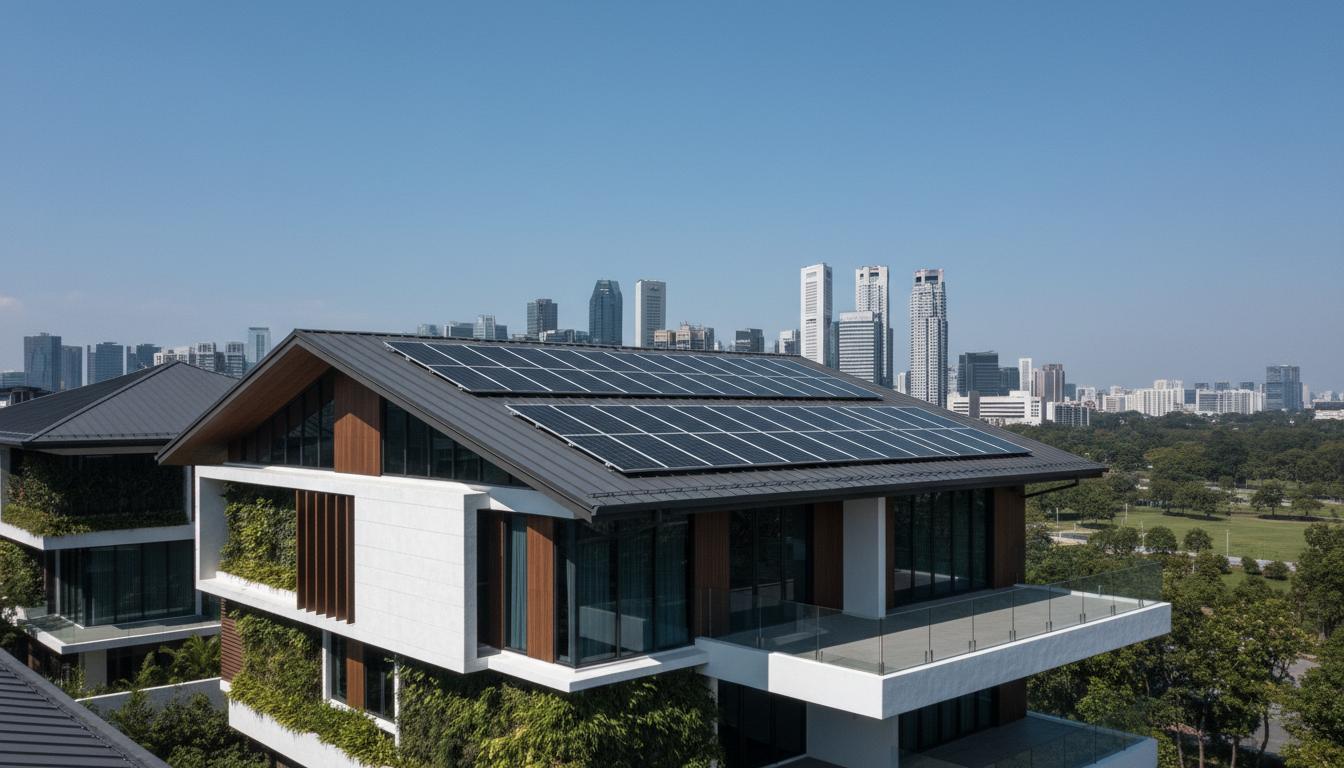
Landed properties represent the sweet spot for solar installations in Singapore. With 400-800 square feet of roof space, minimal shading constraints compared to high-rise neighbors, and full ownership control, landed homeowners can install systems of 8-20 kW — generating enough electricity to offset 80-100% of consumption.
Whether you own a terrace house in Ang Mo Kio, a semi-detached in Serangoon, or a bungalow in Bukit Timah, this guide covers everything from roof assessment to aesthetic integration and maximizing your solar investment.
Landed homes offer the best solar potential in Singapore. Get a tailored residential system design.
Get a landed home solar installation quoteLanded Property Solar Potential
- 🏠 Terrace house: 8-12 kW system (S$16,000-22,000)
- 🏠 Semi-detached: 10-15 kW system (S$16,000-25,000)
- 🏠 Bungalow: 15-25 kW system (S$22,000-40,000)
- 🏠 Corner terrace: 10-15 kW with dual roof faces
- 🏠 Good class bungalow: 20-40 kW+ with extensive roofs
Roof Assessment for Landed Properties
Optimal Roof Characteristics
The ideal solar roof in Singapore has:
- Orientation: True south (azimuth 180°) maximizes production
- Tilt angle: 10-15° optimizes for Singapore's 1.35°N latitude
- Area: Minimum 300 sq ft for meaningful systems (5+ kW)
- Condition: Structurally sound with 10+ years remaining life
- Shading: Minimal obstruction from trees or buildings
Handling Non-Optimal Roofs
Not every landed property has a perfect south-facing roof. Here's how to handle common challenges:
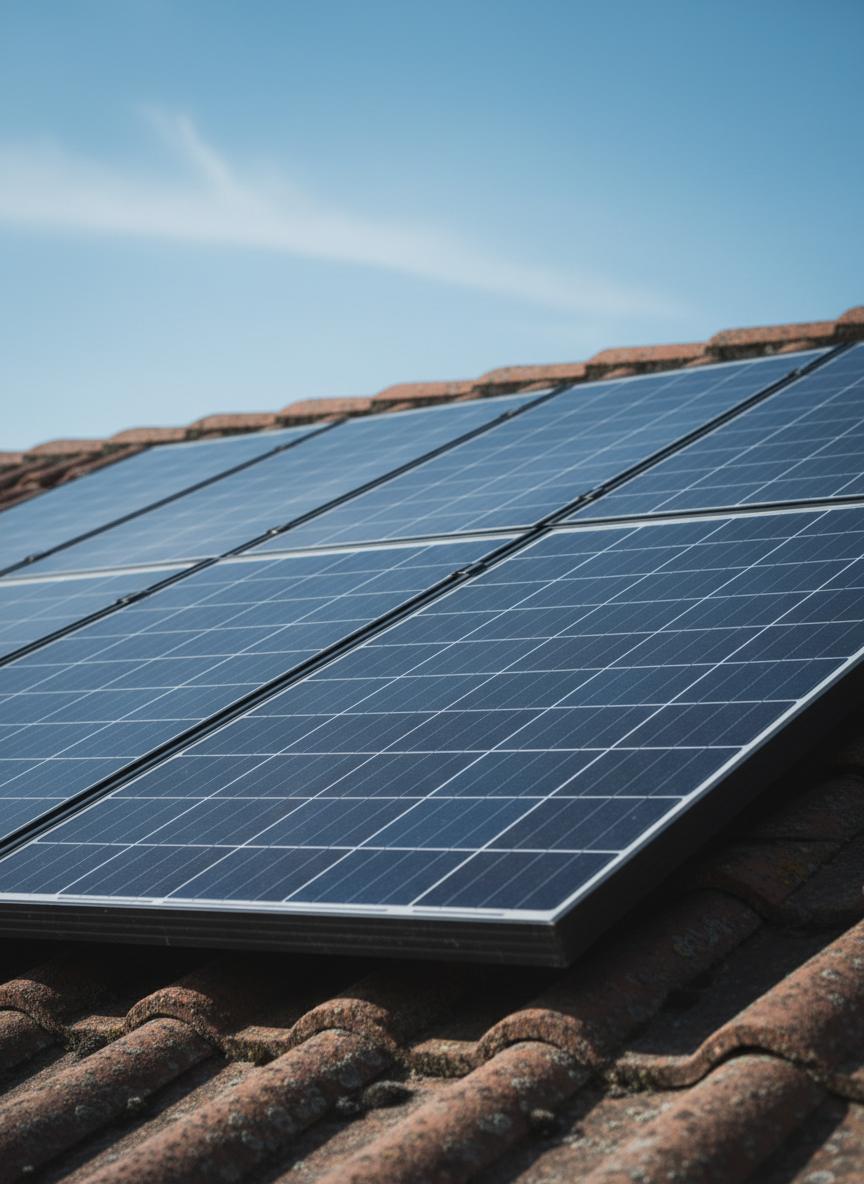
- East-west facing roofs: Acceptable with only 10-15% annual production loss. Install panels on both faces for morning and afternoon generation.
- North-facing roofs: 20-30% production loss but still viable with premium panels and larger systems.
- Flat roofs: Require elevated mounting (10-15° tilt) for self-cleaning and optimal angles. Ballasted systems avoid roof penetrations.
- Complex roof shapes: Multiple small faces can be combined with microinverters for maximum output.
Drone-Based Assessment
Argyle Solar uses drone surveys for accurate measurements and 3D shading analysis. This technology identifies optimal panel placement, estimates annual production within 5% accuracy, and detects potential issues invisible from the ground.
Book a free drone assessment for your property.
System Sizing for Landed Homes
Matching System to Consumption
Average landed property electricity consumption in Singapore:
- Small terrace: 1,500-2,500 kWh/month → 8-12 kW system
- Medium semi-D: 2,500-4,000 kWh/month → 12-18 kW system
- Large bungalow: 4,000-8,000 kWh/month → 18-30 kW system
Oversizing Strategy
With Singapore's generous net metering (sell excess at S$0.20/kWh), slightly oversized systems make sense:
- Cover 100-110% of annual consumption
- Account for future EV charging (adds 3,000-5,000 kWh/year)
- Plan for pool pump or aircon upgrades
- Ensure inverter can handle expansion
Aesthetic Integration
Panel Appearance Options
Modern solar panels offer aesthetic choices:
- All-black panels: Monocrystalline cells with black frames blend into dark roofs
- Frameless glass-glass: Sleek, low-profile appearance
- Bifacial panels: Glass on both sides for modern architectural look
Concealing Infrastructure
- Inverters in garage or utility rooms rather than visible locations
- DC cabling routed through attic spaces
- Monitoring equipment hidden in electrical panels
- Smart layouts that follow roof geometry
Installation Process for Landed Properties
Typical Timeline
- Week 1: Site assessment and drone survey
- Week 2: System design and quotation
- Weeks 3-4: SP Group application and equipment procurement
- Week 5: Installation (1-3 days)
- Weeks 6-7: SP Group inspection and meter installation
- Week 8: System activation
Structural Considerations
Solar panels add 15-20 kg per square meter. For older properties (pre-1990), structural assessment may be needed. Reinforcement costs S$2,000-5,000 if required. Most modern houses handle solar loads without modification.
Maximizing Solar Value for Landed Homes
Time-Shift Consumption
Run high-consumption appliances during solar peak hours (10am-3pm):
- Washing machines and dryers
- Pool pumps and filters
- EV charging
- Air conditioning pre-cooling
- Water heaters
Future-Proofing
Plan for expansion:
- Install hybrid inverter for future battery addition
- Reserve roof space for additional panels
- Ensure electrical panel has spare capacity
- Consider EV charging infrastructure
Property Value Impact
Studies show solar-equipped homes sell for 3-5% premiums. For a S$2 million landed property, that's S$60,000-100,000 in added value — often exceeding the solar system cost.
Maintenance for Landed Property Solar
Cleaning Schedule
Landed properties face specific challenges:
- Tree pollen and leaves (quarterly cleaning)
- Bird droppings (monthly spot cleaning)
- Dust from nearby construction (as needed)
- Haze from regional fires (post-event cleaning)
Vegetation Management
Trim trees annually to prevent shading. Even small shadows can disproportionately reduce panel output due to the "Christmas light effect" in string configurations.
Argyle Solar offers landed property maintenance packages including cleaning, inspection, and vegetation assessment. View our maintenance services.
Case Study: Serangoon Garden Terrace
Property: 3-storey terrace, 4,000 sq ft
System: 10.5 kW (30 panels, 350W each)
Cost: S$18,500
Annual Production: 14,700 kWh
Annual Savings: S$4,400
Payback: 4.2 years
25-Year Profit: S$91,500
The system covers 95% of the home's electricity needs, with excess exported to the grid. Owner also installed a 7 kW EV charger powered primarily by solar.
Ready to Go Solar?
Get a free site assessment, custom system design, and detailed savings projection for your property.